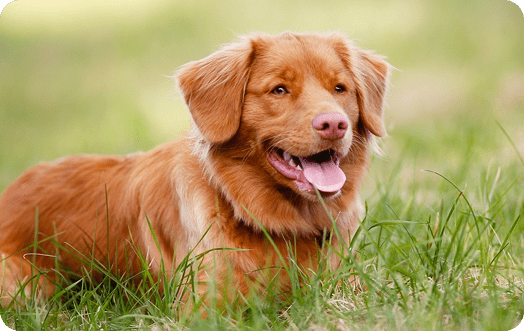

A Husky and a Golden Retriever are both dogs. They both eat kibble. They both need a walk. They both love you. But they are not the same animal, and training them as though they are is one of the most common and costly mistakes a dog owner can make.
Over 35 years and thousands of client encounters, one pattern Alisa Peterson-White sees repeatedly at Lake Cumberland K9 Training Center is this: owners who get frustrated with their dog for not responding the way a previous dog did, or the way their neighbor’s dog does, or the way some well-behaved dog on YouTube responds. They followed the same training approach. They read the same articles. They bought the same treats. And the dog is still a chaos machine.
The problem is almost never the dog. It is the mismatch between what the training approach is offering and what that particular dog, with its particular breed history and instincts, actually needs.
Before any dog was ever a house pet, it was something else. A herder. A hunter. A guard. A tracker. A retriever. A vermin killer. Humans spent centuries selectively breeding dogs for extremely specific purposes, reinforcing specific drives and traits generation after generation. Then, somewhere along the way, we started expecting those same dogs to simply sit quietly on a rug and behave.
That is not how instincts work.
A terrier sitting in your lap with a bow in its hair still has every instinct that drove its ancestors to burrow underground and kill rodents. That drive doesn’t go away because the dog now lives in a climate-controlled home. Terriers are known for obsessive-compulsive behaviors. When those instincts are not given an outlet, they will lick floors obsessively, chase lights, spin in circles, snap at shadows, and generally create behavioral chaos that baffles owners who have never taken a serious look at what that breed was built to do.
An Australian Shepherd who is not worked is essentially an extremely intelligent animal being asked to do nothing. These dogs were designed to problem-solve and move for hours every single day. When they don’t get that, they invent problems to solve. They redecorate your home. They herd your children. They develop anxiety that has owners Googling symptoms in desperation.
A German Shepherd who has been humanized, treated like a person, given no structure, and allowed to run the household will often develop what looks like aggression but is actually a dog stepping into a leadership vacuum because no one else has. They can become controlling, reactive, and potentially dangerous, not because German Shepherds are dangerous by nature, but because a dominant breed with no clear pack leader finds its own answer to that question.
These are not bad dogs. They are misunderstood dogs.
Goldendoodles are one of the most popular breeds in America right now, and Alisa has trained quite a few of them at Lake Cumberland. They are charming, clever, affectionate dogs. They are also frequently disasters in the home, not because of any flaw in the breed, but because owners consistently underestimate how intelligent they are.
Smart dogs are not easy dogs. Smart dogs are dogs who figure out the rules faster than you can enforce them. They identify the loopholes. They test every boundary, not out of spite, but because their minds are working constantly and they are always trying to understand the system they live in. When an owner is not consistent, a smart dog very quickly learns which rules are real and which can be ignored.
In her book, Alisa recounts working with a Goldendoodle who had so thoroughly learned to read and manipulate her owner’s emotional state that training the dog required first coaching the owner to stop being predictably managed. The dog was not vicious. She was brilliant. And that brilliance had been applied, without any guidance, entirely in the direction of running the household.
This is also why breed matters in terms of mental stimulation. A Bloodhound needs different enrichment than a Border Collie. A Basset Hound is not going to thrill at agility work the way a Belgian Malinois will. Matching the training to the dog means understanding what drives that dog, what activates their instincts, what channels their energy productively, what their brain actually needs to be satisfied.
How do you know if the problem isn’t your dog’s behavior but your training method? Here are some patterns that suggest a mismatch:
Your dog is not retaining training. If a dog learns a command in session and then seemingly forgets it entirely the next day, it often means the training method is not engaging the way that dog learns. Some dogs are highly food motivated and respond beautifully to treat-based training. Others are far more engaged by play, by praise, or by work-based rewards. One approach does not fit all.
Your dog seems anxious during training. Training should build confidence, not erode it. If your dog is shutting down, becoming avoidant, or showing stress signals during training sessions, the approach needs to change, whether that means adjusting the pressure, the pace, or the reward system.
Your dog is well-behaved at training and wild at home. This almost always indicates a disconnect between the training environment and the home environment. The training worked, but the home is still giving mixed signals. The owner’s behavior at home is undoing what the training built.
Your working breed is getting worse, not better. High-drive dogs who are under-exercised and under-stimulated will become more difficult with standard obedience training alone. They need their drive channeled. Obedience without outlet is like building a pressure cooker with no release valve.
At Lake Cumberland K9 Training Center, no two training programs look exactly alike. This is one of the things that distinguishes Alisa’s approach, and one of the reasons clients drive hours to work with her, including clients from North Carolina who make the eight-hour round trip rather than trust their dog to anyone else.
When a new dog arrives, Alisa reads them. She watches how they move, how they respond to stress, how they interact with other dogs, where their drive is, what they are motivated by, and what their threshold for pressure is. That assessment shapes everything that follows.
For a high-drive working breed, training involves not just commands but job assignments. Mental challenges. Physical work. These dogs are given purposeful tasks and taught to work for their rewards in ways that align with their instincts. The result is a dog who is not just obedient but genuinely settled, because their fundamental needs are being met.
For an anxious, sensitive dog from a breed prone to over-attachment, the work is different. Boundaries around the owner’s emotional behavior are as important as the dog’s commands. Building the dog’s tolerance for independence, creating calm rituals around departures and arrivals, teaching the dog that the world is safe and stable, this requires patience and consistency that extends well beyond the training facility and into the home.
For over-indulged small breeds, the Yorkies, the Chihuahuas, the dogs whose owners have unintentionally taught them that screaming, snapping, or generally behaving like a dictator gets results, the work involves patiently, steadily removing the reinforcements that maintained those behaviors while establishing a completely new framework of expectations.
The common thread is individual assessment. The common principle is that every dog’s training needs to fit that dog.
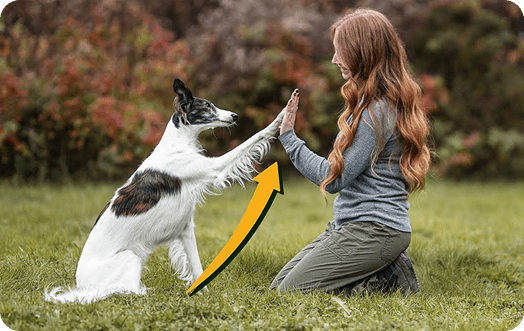
One of the most remarkable aspects of Alisa’s practice is her work with hearing-impaired dogs. Training dogs in sign language is one of her specialties, and it illustrates something profound about what happens when training is truly tailored to the individual animal.
Hearing-impaired dogs often arrive having spent their entire lives in a communication gap. Their owners have been speaking to them in a language the dogs literally cannot access, and the dogs have been doing their best to navigate a world that doesn’t make complete sense. Once Alisa bridges that gap, teaching the dog basic commands and behavioral cues through hand signals, and then teaching the owner how to communicate the same way, the transformation is often extraordinary. These dogs, who had been written off as difficult or untrainable, turn out to be among the most responsive learners she has ever worked with.
They had not been failing. They had been waiting for someone to speak their language.
The same is true, in less dramatic but equally real ways, for every dog who seems unreachable by standard training approaches. The dog is not the problem. The communication gap is the problem.
Before you assume your dog is a lost cause, or that you need a more forceful approach, or that this particular breed is just difficult, ask yourself whether the approach you have been using actually fits the dog in front of you.
Does your terrier have a job, or are those instincts building pressure with nowhere to go? Is your working breed getting enough mental stimulation, or are you asking an athlete to live like a couch dog? Is your sensitive, anxious dog being given clear, calm structure, or is it absorbing the emotional chaos of a household that doesn’t realize what it’s broadcasting?
Understanding what your dog was bred to do, what drives them, what they need, what their brain and body require to be genuinely satisfied is not just good training knowledge. It is the beginning of a genuine relationship with your dog, one built on respect for who they actually are rather than who you hoped they would be.
At Lake Cumberland K9 Training Center, we build every program around that respect. It is why we get results with dogs that other trainers couldn’t reach. Not because of some special magic, but because we take the time to actually see the dog.